
Skardu and Nangma Valley
Nangma valley

Start:islamabad
End:islamabad
Country
Pakistan
Cities
Skardu & Baltistan
Duration
11 Days 10 Nights
Group size
2–10
Minimum Age
17+
Style
Trek
Next Departure: 10 Jun 2026
Dates and pricesWhat Makes
this Trip special
A Cultural Journey & Camping Trek in Gilgit-Baltistan — 11 Days / 10 Nights
There is a moment, somewhere between Khaplu and Kanday, when the road simply stops. The vehicle can go no further, the valley narrows, and what's left is a footpath, a river, and the granite walls of Nangma closing in on either side. Everything before that point has been leading here, to a place that doesn't announce itself and doesn't perform for anyone. This is the trip we built for people who want that moment.
The itinerary moves in two registers. The first half is cultural — forts, mosques, museums, a cold desert that makes no sense until you're standing in it. The second half is quiet — two days of walking and camping in a valley most travelers have never heard of. Neither half is padding for the other; that's simply how this region works.
The journey
You begin in Islamabad with Faisal Mosque and a welcome dinner, then fly into Skardu (weather permitting), where the landscape changes registers entirely — turquoise lakes, glacial rivers, bare rock. Three unhurried days here take in the dunes of Sarfaranga, an organic village, Kharpocho Fort's valley-wide view, and a day trek out to Masroor Rock. From there, east to Khaplu — once an independent princely state and still the region's most architecturally serious town, anchored by the restored Khaplu Fort and the outlook from Thoqsir viewpoint.
The trek
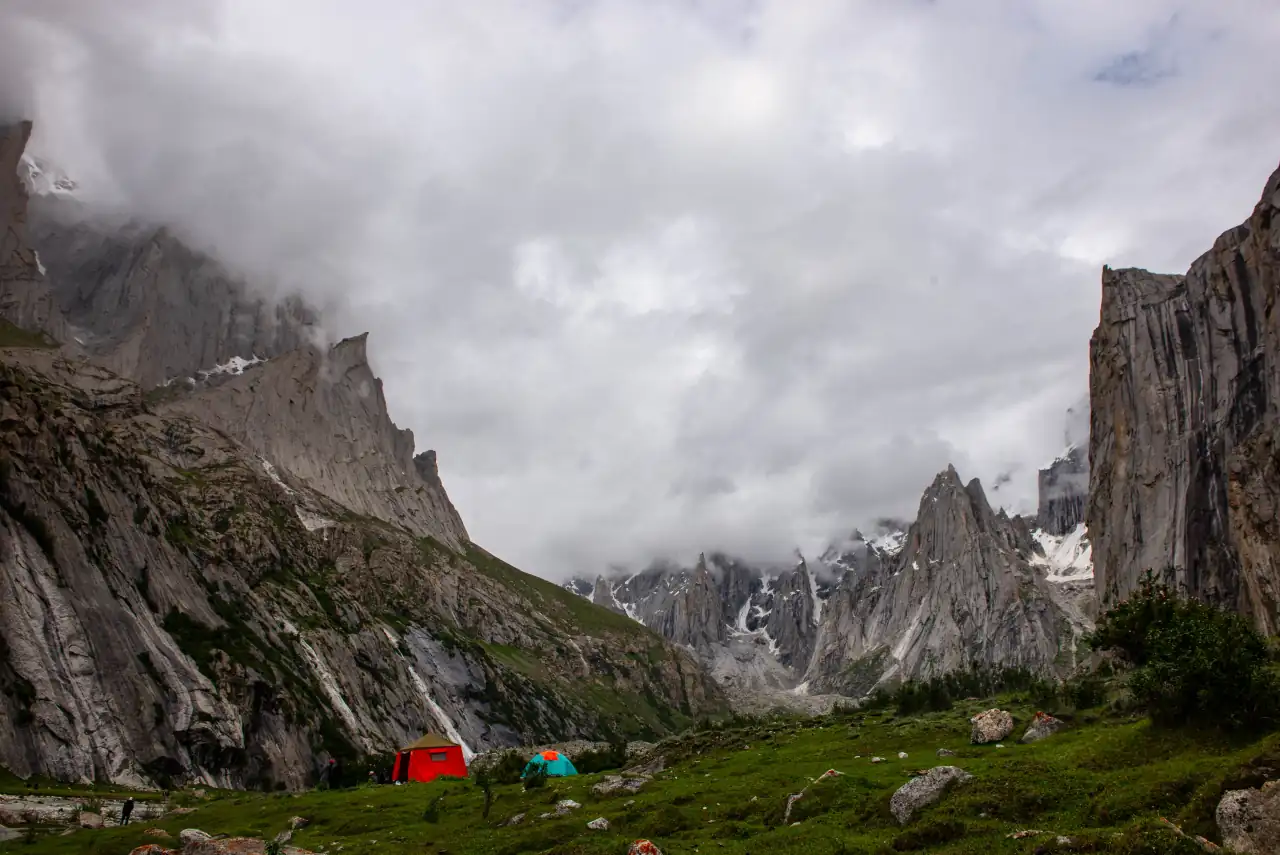
From Khaplu, the drive continues to Kanday, and from Kanday, you walk. Nangma Valley draws a handful of climbing expeditions each year and almost no one else. The trail follows the Nangma River through birch forest and open pasture until Amin Brak stands directly ahead — a sheer granite face rising straight out of the meadow floor. Two days here, one walking in and one exploring the upper valley, is enough to feel the particular silence of a place that isn't used to visitors. A trekking crew handles the camping and meals; what's left for you is the walking.
From there, the loop closes: back to Skardu, a flight to Islamabad, and a final day at Lok Virsa Museum and the Pakistan Monument before departure.
Why this trip
Wandering Yaks builds every itinerary around the people who live in these valleys — the drivers, hosts, and Kanday-based trekking crew who know Nangma better than any guidebook. This is a trip for travelers who want the forts and museums and the unmarked trail. It asks for some flexibility — Skardu's flights are genuinely weather-dependent, and the trekking days require reasonable fitness — but it gives back a version of northern Pakistan most itineraries don't go looking for.
Is this trip right for you?Fitness level. The cultural half of the trip — Islamabad, Skardu, Khaplu — is easy: short walks, a fort or two, nothing demanding. The Nangma Valley trek is the real fitness ask. You're on your feet for 5–7 hours across all three trekking days, on uneven trail, gaining and losing elevation as you go, at altitude the whole way. You don't need to be an athlete, but you should be someone who walks regularly and isn't starting a multi-day trek from a standing start. If you can comfortably do a full day of hiking with a daypack and wake up the next morning ready to do it again, you're in good shape for this. Experience needed. No technical climbing, ropes, or scrambling — this is a walking trek, not a mountaineering trip. But it's also not a warm-up trek. There are no teahouses or villages along the Nangma trail once you leave Kanday; it's tents, a trekking crew, and whatever the weather does. Some prior experience with multi-day trekking or camping — even just one or two nights out before — makes the adjustment easier. First-time trekkers can absolutely do this, but it shouldn't be their first time sleeping in a tent at altitude. Who should think twice. This trip isn't a good fit for anyone with a heart or respiratory condition that altitude could aggravate, anyone who needs regular access to medical care, or anyone who isn't comfortable with basic camping — no hot showers, a pit toilet at best, and cold nights even in summer. It's also not the right trip for young children, or for travelers who want the mountains from a car window rather than on foot. If the idea of three days without phone signal, sleeping on the ground, and walking uphill for hours sounds like a hardship rather than the point of the trip, Skardu and Khaplu alone — without the Nangma extension — would suit you better.
surreal nagma valley which also called the yosemite of pakistan
safaranga cold desert which is straight out of hollywood movie
the heritage sites such as khorpocho fort,shigar fort and khaplu fort takes you back in time
the real nomadic feel and tibetian inluence of the place
islamabad to skardu flight where you have a sight of the karakoram and himalayan range and view of 9th highest mountain in the world nanga parbat
Chunda valley which is one of kind settlement looks out of fantasy movie
Map & Itinerary
11 daysLoading map…
Dates & Availability
View Dates and Prices
12 days
Start
islamabad, PAKISTAN
Wednesday, 10 Jun 2026
End
islamabad, PAKISTAN
Sunday, 21 Jun 2026
11 days
Start
islamabad, PAKISTAN
Friday, 11 Sept 2026
End
islamabad, PAKISTAN
Saturday, 22 Aug 2026
What is Included
- ✓ breakfast
- ✓ welcome dinner and farewell dinner
- ✓ camping services and all foods, including breakfast,luch and dinner
- ✓ english speaking guide for the whole trip
- ✓ experienced driver for the whole trip
- ✓ internal flights in pakistan
- ✓ Porters for the trekking days
- ✓ letter of invitation and all supportive documents
- ✓ All accomadations during the trip
Not Included
- ✗ International flights
- ✗ Visa application fees
- ✗ any travel insurance
- ✗ porters for your personal belongings
- ✗ personal snacks and drinks
- ✗ alcholic beverages
Kit list
gear
- ●trekking shoes, hikking poles, rain jacket,windbreaker , treeking socks
Frequently asked questions
do i need any climbing equiment for the trek?
no you need only trekking gear with good trekking shoes , rain jacket, trekking poles, warm trousers, etc
is pakistan safe for women?
Yes — and this is one of the questions we get asked most, so it's worth answering properly rather than with a quick reassurance. The north of Pakistan — Hunza, Skardu, and the wider Gilgit-Baltistan region — has built a strong and well-earned reputation among solo female travelers over the last several years. Thousands of women travel through this region every season, many of them solo, and the overwhelming majority describe it as one of the safest places they've traveled anywhere in the world. Violent crime against tourists is rare, communities are close-knit and protective of visitors, and it's common to see solo women trekking, photographing, and staying in local homestays without incident. Much of the hesitation comes from a version of "Pakistan" shaped by news coverage of other parts of the country, or by outdated perceptions that haven't caught up with how much the north has opened up to travelers over the past decade. Gilgit-Baltistan is culturally distinct, deeply hospitable, and a genuinely different experience from what headlines might suggest — the propaganda around Pakistan's safety rarely reflects the reality on the ground here. That said, "safe" doesn't mean "no different from home," and part of traveling well is dressing modestly, being respectful of local customs, and using good judgment — the same baseline care you'd bring to any unfamiliar place. This is also where having a professional team on the ground matters. Every Wandering Yaks trip is led by experienced local hosts and guides who know the region, the routes, and the communities personally — so you're never navigating unfamiliar terrain alone, and support is always close at hand if you need it. Female travelers consistently tell us it's this local, community-based approach — more than any single safety tip — that made them feel genuinely at ease throughout the trip.
What is weather like?
June through September — the season this trip runs in — brings warm, sunny days across Skardu and Khaplu, with daytime temperatures typically in the low-to-mid 20s°C (70s°F) and cool nights. Up in Nangma Valley, expect it to drop further after dark, even in peak summer, so warm layers for camp are a must. Islamabad stays warm and can be humid, especially earlier in the summer. Weather in the high valleys can shift quickly, which is also why Skardu's flights are weather-dependent — pack for sun, cold nights, and the occasional rain shower, and you'll be covered.
What is the accommodation like in Pakistan?
Rooms are based on twin sharing. If you'd prefer your own space, single supplement is available for both hotel rooms and tents at an additional cost — just let us know when booking. Across this trip you'll stay in a mix of comfortable guesthouses and hotels in Islamabad, Skardu, and Khaplu, plus two nights under canvas in quality, comfortable tents once we're camping in Nangma Valley. Mountain hotel rooms don't have air-conditioning — you won't need it at these elevations — while your room in Islamabad will. One flag before I lock this in: your usual phrasing mentions a village homestay in Ghulkin — that's in the Hunza/Gojal area, which isn't on this Skardu–Khaplu–Nangma Valley route, so I left it out above. Let me know if you'd like a homestay night added somewhere on this itinerary (Khaplu or Chunda Valley could both work), or if this was just boilerplate carried over from another trip and the version above is good as is.
What is the required fitness level?
Masroor Rock is a day trek and a good measure for the rest of the trip — a few hours on foot with some elevation gain, manageable for anyone with a reasonable, regular level of activity. No prior trekking experience needed. Nangma Valley is the bigger ask. Across the three trekking days you're walking 5–7 hours a day on uneven trail, gaining and losing elevation at altitude, carrying just a daypack while the crew handles the rest. You don't need technical climbing skills, but you should be someone who hikes or exercises regularly and is comfortable being on your feet for a full day, several days in a row. If you can handle a demanding day hike and wake up ready to do it again, you're fit enough for Nangma Valley.
Why do I need to book a Tour? Can I visit Pakistan on my own?
You absolutely can — Pakistan doesn't require a tour, and plenty of experienced independent travelers do it well, especially around Hunza and the Karakoram Highway, where infrastructure is more established. Where it gets harder is exactly where this itinerary goes deepest. Nangma Valley has no hotels, no signage, and no easy way to arrange porters, camping gear, or a trekking crew on the ground without local contacts — you'd be organizing logistics in a language you likely don't speak, in a place where mistakes (a missed weather window, an underprepared camp) are more consequential. Skardu's flights are notoriously weather-dependent, and knowing when to push forward versus switch to the road alternative is the kind of judgment call that comes from experience, not a guidebook. Booking with us isn't about convenience for its own sake — it's what makes places like Nangma Valley accessible at all. Our guides and crew are from these valleys; the access, safety net, and cultural context they bring is the actual product, not just the transport and hotels. If you're happy sticking to well-trodden routes, go independent. If you want the parts of northern Pakistan that don't show up without local relationships, that's where a tour like this earns its cost.
What is the average tour demographic?
Travelers typically range from mid-20s to mid-50s, with a mix of solo travelers, couples, and small groups of friends — drawn together by an interest in culture and moderate trekking rather than extreme adventure. Roughly balanced between men and women, mostly independent-minded travelers who want an authentic, guided experience rather than a fully independent trip. Most come from Western Europe (UK, Germany, France, Netherlands) and North America (US, Canada), with a growing number from Australia and other parts of Asia. Same flag as before — I don't have your actual client data, so the nationality mix above is a reasonable estimate based on who typically travels to this region, not a real stat from your bookings. Send over your actual numbers if you want this locked to reality rather than a good guess.
Important notes
Before doing Nagma Valley, we have made sure with a warm-up trek that reaches up to 3700m as an acclimatization trek. Make sure you don't have any altitude problems before signing up for this tri,p anyou d should at least have some trekking and camping experience in a mountainous region
Subscribe to save on your next trip
Subscribe to receive travel tips, new trip announcements, and exclusive offers from WanderingYaks.
From
$3,000